Bucket Seats: What to Know Before You Buy
Why Upgrade to Bucket Seats?
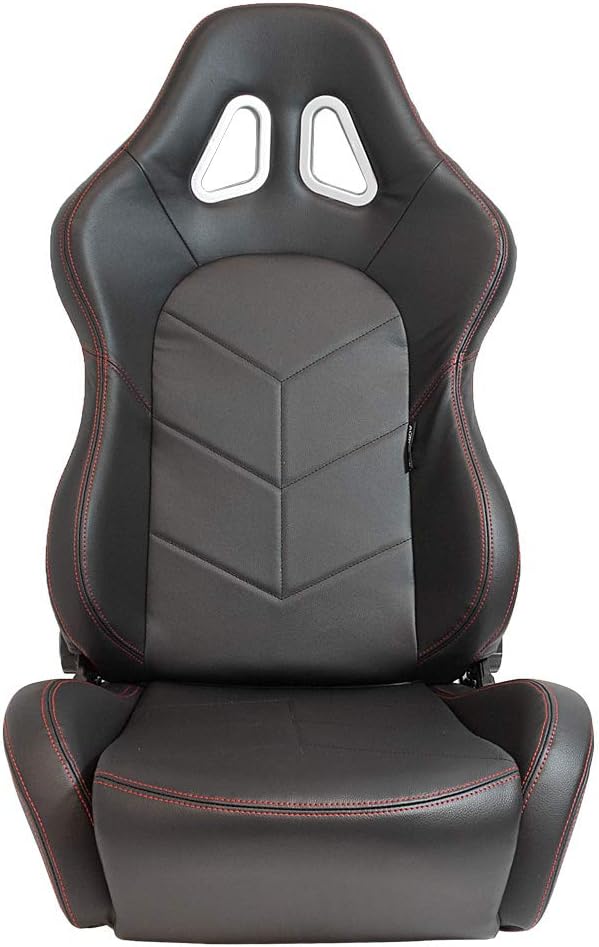
Bucket seats (also known as sport seats or racing seats) are one of the most dramatic upgrades you can make to a car's interior. They provide:
- Dramatically better lateral support — keeping you in place during hard cornering
- Improved driving position — lower hip point, better leg support
- A motorsport aesthetic — instantly transforms the cabin
- Compatibility with racing harnesses — for track use where a standard seatbelt isn't enough
Whether you're building a track car, a show car, or just want to feel more connected to your daily driver, bucket seats are a defining modification.
Types of Bucket Seats
1. Fixed-Back (One-Piece) Seats
A single shell with no recline adjustment. The lightest, stiffest, and most supportive option. Used in motorsport where the seat is tailored to the driver.
Best for: Track cars, competition builds, dedicated weekend cars.
Not ideal for: Daily drivers — no recline, can be uncomfortable for passengers of different sizes, and can draw attention at MOT time.
2. Reclining Bucket Seats
Two-part construction with an adjustable backrest. You get the look and support of a bucket seat with the practicality of recline adjustment.
Best for: Daily drivers, street-driven modified cars, anyone who carries passengers of varying heights.
Trade-off: Slightly heavier than fixed-back, and the recline mechanism is a potential failure point.
3. Half-Bucket / Sport Seats
A middle ground between OEM and full bucket seats. More lateral support than standard seats, but less aggressive than a true bucket. Many OEM "sport seats" (Golf GTI Recaros, Civic Type R seats) fall into this category.
Best for: Drivers who want improved support without the full motorsport look.
Understanding Seat Measurements
The most critical measurement is hip width — the internal width at the seat base. This determines whether you'll fit comfortably:
| Seat Width | Body Type | |-----------|-----------| | 340–370mm | Slim build, up to ~30" waist | | 380–420mm | Average build, up to ~36" waist | | 430–470mm | Larger build, ~36–42" waist | | 480mm+ | Larger build, over 42" waist |
Tip: If you're between sizes, go wider. A seat that's too narrow is uncomfortable and restricts movement. A slightly wider seat still provides support.
Also check:
- Shoulder width — your shoulders should fit between the side bolsters without being squeezed
- Seat height — some bucket seats sit lower or higher than OEM; check that you can still see the instruments
- Maximum harness slot width — if you plan to use a 4- or 5-point harness, check the slot width is compatible
Fitting Bucket Seats: What You Need
Seat Rails / Sliders
Bucket seats don't bolt directly to the car floor. You need seat rails (sometimes called seat mounts or subframes) that adapt the seat to your car's floor mounting points.
Two options:
- Pre-made model-specific rails — designed for your exact car. Bolt-on, no fabrication. The easiest and safest option.
- Universal rails with custom fabrication — cheaper but requires welding or custom brackets. Only for experienced fabricators.
At LJ-Automotive, we always recommend model-specific rails. Check our listings — we stock rails for popular fitments including VW, Audi, BMW, Honda, and Ford.
Harnesses
If you're fitting bucket seats with harness slots, you'll want a multi-point harness:
- 4-point harness: Two lap belts + two shoulder belts. Common for street/track use.
- 5-point harness: Adds an anti-submarine strap between the legs. Required for most track day regulations.
- 6-point harness: Two anti-submarine straps. Used in serious competition.
Important: Harnesses are not road legal for daily use in the UK unless they are E-marked and the car was originally type-approved with harnesses. For track use, always use FIA-approved harnesses within their validity period (typically 5 years from date of manufacture).
Road Legal Considerations
-
MOT and bucket seats. Aftermarket seats are legal for MOT as long as the seat is securely mounted, the seatbelt mounting points are intact, and the seat doesn't obstruct the driver's view or control.
-
Seatbelt anchor points. If your car has the seatbelt mounted to the seat (common on modern cars), your aftermarket seat must have compatible belt mounting points — or you need to retrofit the seatbelt to the B-pillar. This is a safety-critical modification.
-
Insurance declaration. Bucket seats must be declared to your insurer. Most performance car insurers accept them without issue; standard insurers may charge a small premium increase.
-
Passenger seat. If you remove the passenger seat entirely, the seatbelt mountings must also be removed or covered. An empty seat location with exposed mounts can fail an MOT.
Common Mistakes to Avoid
-
Buying seats without checking rail availability. The seat might be perfect, but if no one makes a rail for your car, you're stuck with fabrication. Always check rail availability before buying the seat.
-
Going too aggressive for a daily driver. A full FIA-spec fixed seat with 340mm hip width looks incredible at a show but is miserable in a 2-hour daily commute. If the car sees daily use, consider a reclining bucket.
-
Ignoring harness angle. Harness shoulder straps must angle downwards from the seat back to the mounting point at no more than 10° below horizontal. If the straps angle upwards, a frontal impact will compress your spine. Use a harness bar or mount to the rear strut tower — never to the back seat floor.
-
Fitting without a proper torque check. Seat rail bolts are safety-critical. Torque them to the manufacturer's spec and re-check after 100 miles. Loose seats are one of the most dangerous failures on a modified car.
-
Mixing seats left and right. If you're buying two seats, buy the same model in the same width. Mismatched seats look wrong and provide inconsistent support.
Installation: Professional vs DIY
Fitting bucket seats is achievable for a competent DIYer, but it's a safety-critical job. If you're not confident with torque wrenches and understanding load paths, budget £100–£200 for a professional install.
DIY is fine if:
- You're using model-specific bolt-on rails
- You're keeping the original seatbelt mounting points
- You have a torque wrench and know how to use it
Get a professional if:
- You need custom fabrication or welding
- You're relocating seatbelt anchor points
- You're fitting a harness bar
- You're removing seats with airbags or seatbelt pre-tensioners (requires disabling the SRS system properly)
Browse our full bucket seat range — every seat is listed with hip width, material, and compatible rail options so you can find the right fit for your build.