Coilover Install Guide: What to Expect When Lowering Your Car
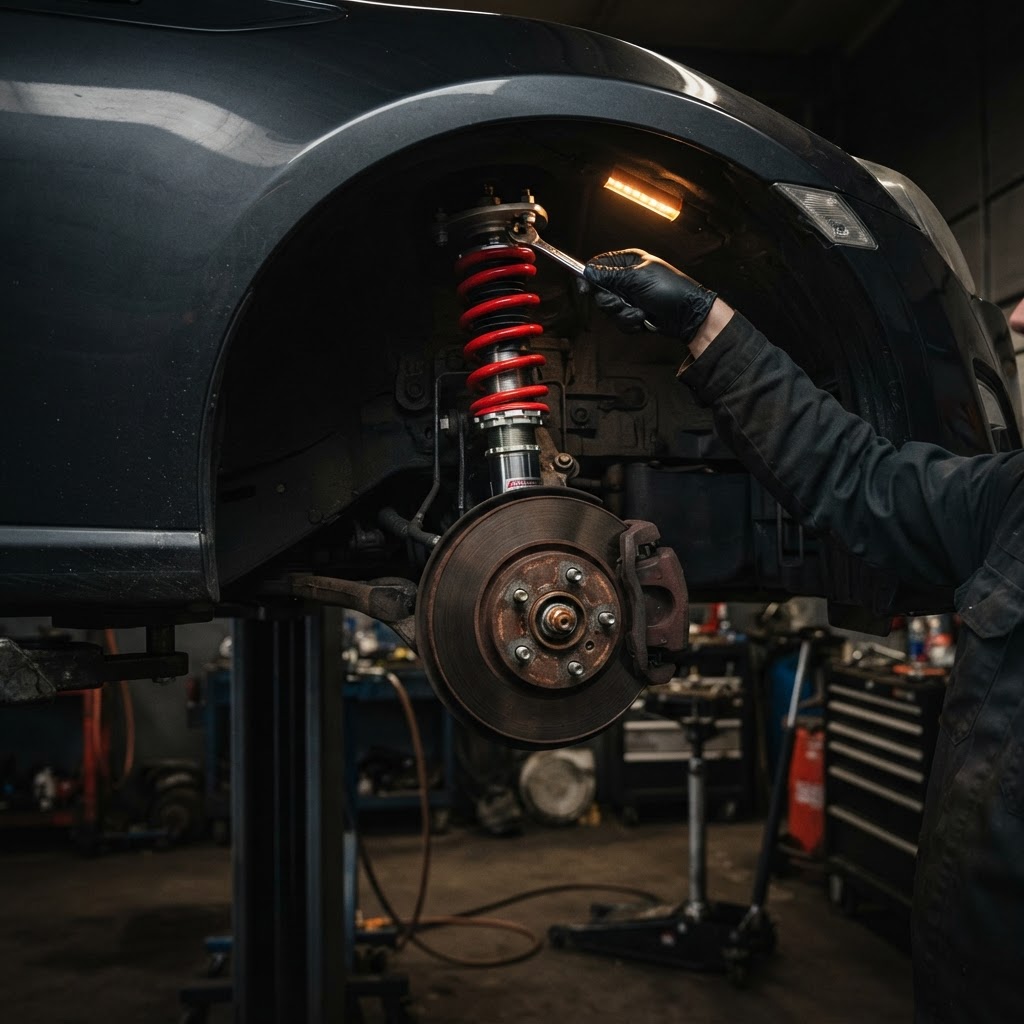
Fitting a set of coilovers is one of the most rewarding upgrades you can make to your car. Done properly, it sharpens the handling, drops the centre of gravity and gives your car a stance that turns heads. But there's more to a coilover install than simply swapping out your old shocks — here's what to expect.
Coilovers vs standard shocks
Standard suspension is a compromise engineered for comfort. Coilovers combine the shock and spring into one adjustable unit, letting you dial in the exact ride height and damping to suit your driving — whether that's a fast-road setup or a track-focused build.
Setting your ride height
Most coilovers offer threaded height adjustment. Start at the manufacturer's recommended setting, then settle the car before measuring again. Drop it too low and you risk losing bump travel; leave it too high and you've wasted the upgrade.
Spring preload and damping
Preload keeps the spring seated under full droop. Too much and the ride goes harsh; too little and you'll hit the bump stops. Match your damper setting to the spring rate for a balanced feel.
Camber plates
Many front coilovers include adjustable top mounts. These let you fine-tune camber for better turn-in and sharper front-end grip, ideal for spirited driving or occasional trackdays.
Installation
Always work on a level surface with the car safely axled on stands. Torque every fastener to spec, and never re-use stretch bolts — coilovers are safety-critical.
Get a 4-wheel alignment
The moment you change ride height, your geometry changes. A professional 4-wheel alignment after fitting protects your tyres and unlocks the handling you paid for. Skip it and you'll wear through a fresh set of fronts in no time.
Ready to lower your car the right way? Shop our suspension range for coilovers, lowering springs and dampers.