How to Choose Coilovers: A Complete Guide
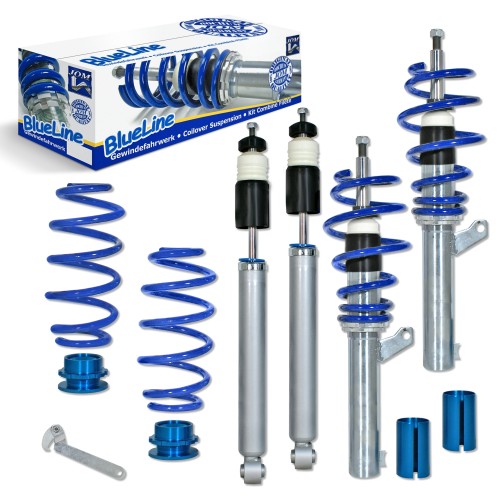
What Are Coilovers?
Coilovers (coil-over-shock absorbers) combine a shock absorber and a coil spring into a single unit. Unlike standard factory shocks and separate lowering springs, coilovers let you adjust ride height and, in many cases, damping stiffness — giving you control over how your car sits, handles, and rides.
They're one of the most popular suspension upgrades for modified cars in the UK, whether you're building a track weapon, a show car, or just want a sharper daily drive with a lower stance.
Coilovers vs Lowering Springs: Which Do You Need?
This is the most common question we get. The short answer:
- Lowering springs are cheaper, easier to fit, and fine if you just want a modest drop (typically 30–40mm) with improved looks and slightly sharper handling. You keep your existing shock absorbers.
- Coilovers give you height adjustability, better performance tuning, and a more aggressive drop (up to 120mm on some kits). They cost more but are the right choice if you want to dial in your setup.
If you're just after a subtle drop on a daily driver, springs will do. If you're serious about handling, going to track days, or want to fine-tune your ride height for show season, coilovers are the answer.
Types of Coilovers
1. Fixed-Height Coilovers
Pre-set ride height — no adjustment. Cheaper than full coilovers but still outperform standard shocks and springs. Good for budget builds where you know the drop you want.
2. Height-Adjustable Coilovers
The most popular type. You can adjust ride height by winding the spring seat up or down. Damping (shock stiffness) is fixed at the factory. Ideal for street-driven modified cars where you want to set your stance exactly where you want it.
3. Full Adjustable (Height + Damping) Coilovers
Both ride height and shock stiffness are adjustable. Top-tier option for track use or serious performance builds. Lets you set up the car soft for road comfort, then stiffen it for track days.
4. Air Suspension
Not strictly coilovers, but worth mentioning. Air bags replace springs, letting you raise and lower the car at the push of a button. The ultimate in adjustability — but significantly more expensive and complex to install.
What to Look For When Buying Coilovers
Spring Rate
Measured in kg/mm or lbs/in. Higher spring rate = stiffer ride but more responsive handling. Street cars typically run 6–10 kg/mm on the front. Track builds may go 12 kg/mm or higher. If you're unsure, stick close to the manufacturer's recommendation for your vehicle.
Damping Adjustment
If you're buying adjustable coilovers, check how many positions the damping has. 16-level is common on mid-range kits; 32-level on premium units. More levels = finer control, but most people set it once and leave it.
Top Mounts
Some coilovers come with top mounts included; others require you to reuse your factory mounts. Pillowball (rose-jointed) top mounts give sharper steering response but transmit more vibration to the cabin. Rubber top mounts are quieter and more comfortable.
Build Quality
Look for stainless steel bodies (resist rust better than zinc-plated), monotube design (better heat dissipation for track use), and properly valved shocks matched to the spring rate. Cheap coilovers with stiff springs on poorly valved shocks will ride terribly.
Vehicle-Specific Fitment
Coilovers are NOT universal. Each kit is designed for a specific chassis. Always check that the coilovers you're buying are listed for your exact make, model, and year. A kit for a Golf MK6 will not fit a Golf MK7.
How Low Should You Go?
This depends on your priorities:
- 30–40mm drop: Improved stance, better handling, no real downside. Daily-drivable, no clearance issues.
- 50–60mm drop: Noticeably lower, more aggressive look. May need to watch speed bumps and steep driveways. Handling improves further if you adjust camber.
- 70mm+: Show car territory. You'll need to modify wheel arches, adjust camber significantly, and accept that daily driving becomes challenging.
For most UK modified car owners, 40–50mm is the sweet spot — looks great, drives fine, and doesn't destroy your ground clearance.
Common Mistakes to Avoid
-
Going too low, too fast. Drop the car in stages. Start at 30mm, drive it for a week, then go lower if you want. This lets you spot clearance issues before they become problems.
-
Not getting a proper alignment. Any suspension change affects your geometry. Get a four-wheel alignment after fitting — preferably at a specialist who understands modified cars. Ignoring this will ruin your tyre wear and handling.
-
Ignoring bump stops. Even with coilovers, the bump stop is your friend. If you remove it entirely to go lower, the shock will bottom out internally and destroy itself. Trim the bump stop if needed, but don't remove it.
-
Mixing and matching spring rates front to rear without understanding the balance. A stiffer rear than front can cause oversteer. Unless you know what you're doing, follow the kit's recommended setup.
-
Buying the cheapest coilovers on the market. There's a reason some kits cost £120 and others cost £800. Cheap coilovers often use poorly matched springs and shocks, rust quickly, and have inconsistent damping. They'll make your car ride worse than stock.
Fitting Coilovers: DIY or Professional?
Coilover fitting is achievable for a competent home mechanic with the right tools. You'll need:
- A jack and axle stands (or a ramp)
- Spring compressors (essential — never remove a strut without compressing the spring first)
- Torque wrench
- Metric socket set
- Breaker bar (coilover top nuts can be seized)
If you've never done suspension work before, budget £150–£300 for a garage to fit them. It's not the job to learn on — a mistake here can be dangerous.
After Fitting: What to Check
- Ride height: Set all four corners, then roll the car back and forth a few metres to let the suspension settle. Re-measure and adjust.
- Four-wheel alignment: Book this within 50 miles of fitting. Don't wait.
- Re-torque: After 500 miles, re-check all top mount and bottom bolt torque settings. They can loosen as everything beds in.
- Damping: Start at the middle setting, drive for a week, then adjust up or down based on how the car feels.
Choosing the Right Brand
At LJ-Automotive, we stock coilovers from proven manufacturers including TA Technix, FK Automotive, and BC Racing. Each brand caters to a different budget and use case:
- TA Technix: Budget-friendly, good value for street builds. Solid entry point if you're new to coilovers.
- FK Automotive: Mid-range with a wide range of fitments. Good balance of price and performance.
- BC Racing: Premium, with full damping adjustment and excellent build quality. The go-to for track-focused builds.
Browse our full coilover range — every kit is listed with the exact chassis it fits, so you can find the right setup for your car in minutes.
Frequently Asked Questions
Will coilovers fail my MOT? No, as long as the coilovers are in good condition, the ride height isn't dangerously low, and your geometry is set correctly. Excessively negative camber from a poor alignment will fail, but coilovers themselves are not a fail item.
Do I need to declare coilovers to my insurer? Yes. Any suspension modification must be declared to your insurance company. Failure to declare can void your policy and lead to a refused claim. Most insurers add a small admin fee — some don't charge extra at all.
How long do coilovers last? Quality coilovers typically last 40,000–60,000 miles on UK roads before needing a rebuild or replacement. Budget coilovers may need attention sooner. Regular cleaning and avoiding winter salt exposure helps extend their life.
Can I fit coilovers myself? If you have the right tools (especially spring compressors) and some mechanical experience, yes. If you're new to suspension work, have a professional fit them — it's worth the £150–£300 labour cost for safety.