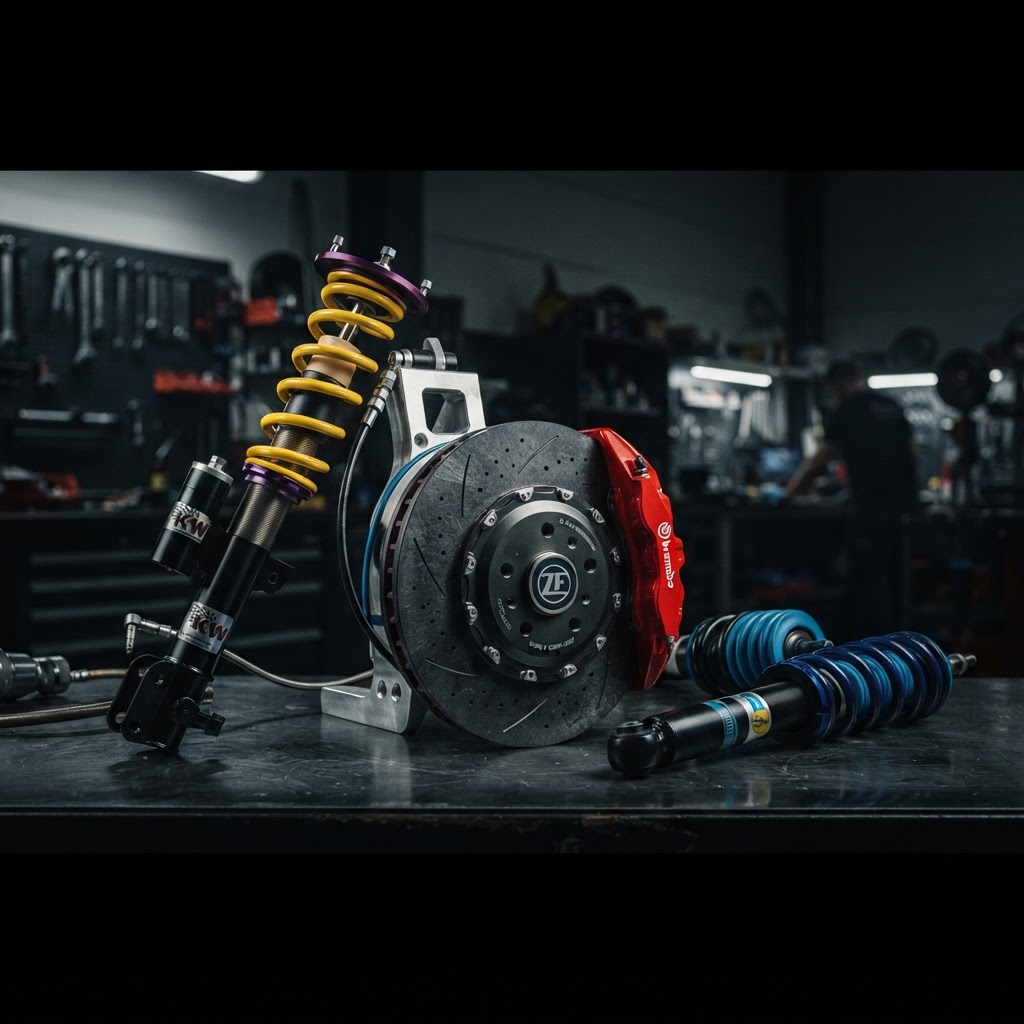
The automotive landscape in Europe is undergoing a major transformation as Euro 7 regulations begin to influence vehicle design and maintenance. While much of the conversation has historically focused on tailpipe emissions, the new standards are placing a spotlight on non-exhaust emissions, specifically those generated by braking systems. ## The Shift in Performance Standards For the independent aftermarket, this means a move toward more advanced, low-dust, and high-durability braking components. Manufacturers like ZF are already leading the charge, developing solutions that help vehicles meet these stringent particle emission limits. For the performance enthusiast, this shift is an opportunity to upgrade to premium braking systems that not only offer superior stopping power but also align with the latest environmental standards. ## Suspension and Handling Synergy It is not just about brakes; the entire vehicle dynamic is being re-evaluated. As cars become heavier and more tech-focused, the role of high-quality suspension becomes even more critical. Whether you are running a daily driver or a track-focused build, investing in precision-engineered coilovers and suspension kits from brands like KW or Bilstein ensures that your vehicle handles the increased demands of modern road conditions while maintaining optimal performance. Takeaway: Euro 7 is not just a hurdle; it is a catalyst for better engineering. By choosing high-quality, modern components, you ensure your car remains at the cutting edge of performance and compliance.
46 days until ChristmasShop the Christmas Gift Guide →Gift guide →