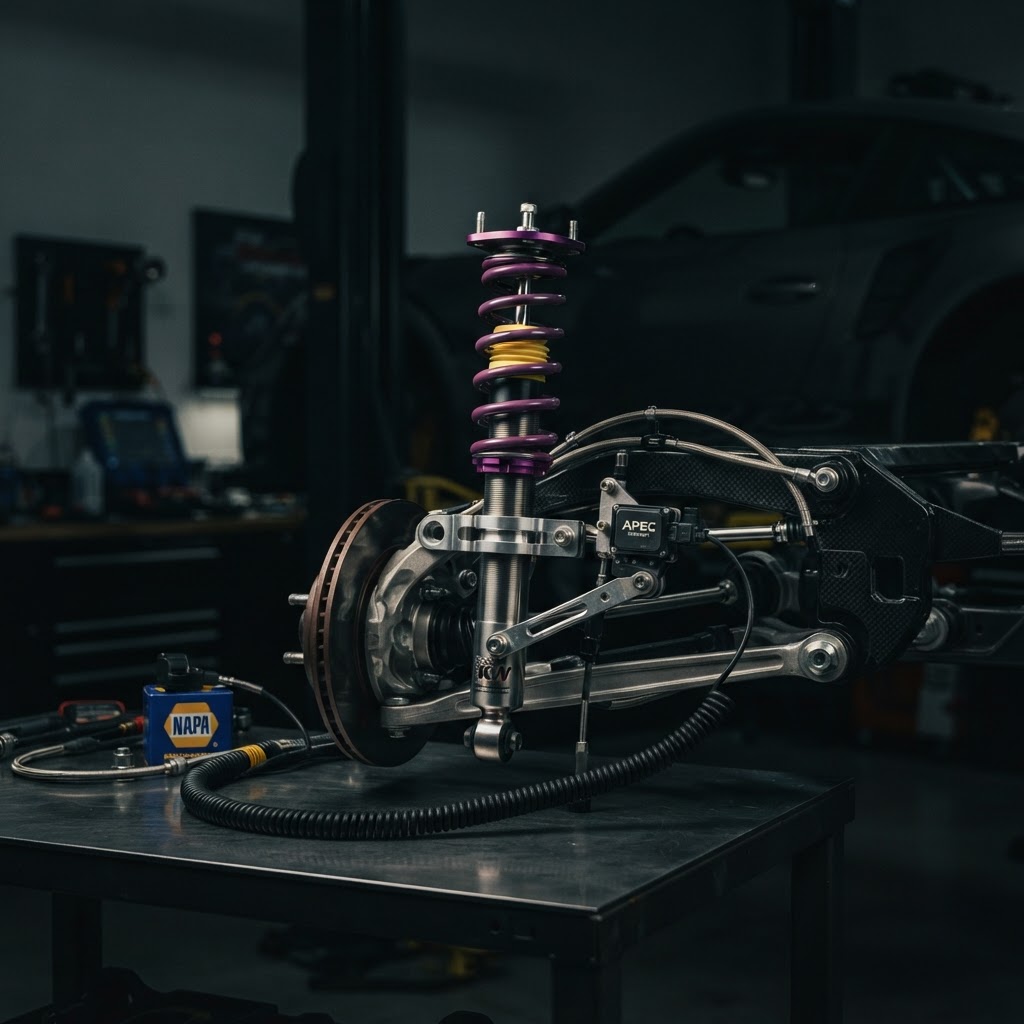
Beyond Traditional Coilovers
For years, the enthusiast community has focused on static drops and adjustable coilovers. However, as vehicle technology evolves, so does the hardware required to keep these systems functioning correctly. Recent product launches from major aftermarket players like NAPA and Apec have highlighted a surge in demand for ride height sensors. These components are no longer just for high-end luxury vehicles; they are becoming standard across a wide range of modern cars.
Why Sensors are Critical
A ride height sensor measures the precise distance between the chassis and the axle. This data is the backbone of several critical vehicle systems, including active damping control, automatic headlamp levelling, and electronic stability programmes. If you are upgrading your suspension, ensuring these sensors are in perfect working order is essential. A faulty sensor can lead to incorrect headlamp alignment—which is an immediate MOT failure—or cause your vehicle’s stability control to behave unpredictably.
Integration with Performance Upgrades
As we see more electronic suspension systems entering the aftermarket, the ability to calibrate and maintain these sensors becomes a key skill for any home mechanic or workshop. Whether you are fitting a new set of KW or Bilstein coilovers, or simply performing routine maintenance, understanding how your vehicle’s electronic brain interacts with its physical suspension is vital. We expect to see more 'OE+' quality sensors hitting the market to support the growing number of vehicles equipped with semi-active and active damping solutions.
Takeaway
Don't overlook the electronics when planning your next suspension overhaul. Proper sensor health is the key to maintaining the safety and performance of modern, tech-heavy vehicles.